Showing posts with label Healthcare. Show all posts

Friday, April 27, 2018

What Could Pain and Weakness in the Right Arm Mean?

Arm pain, usually on the right side, accompanied by a tightening of the chest, nausea, and difficulty breathing can be a symptom of coronary artery disease or even a heart attack in some severe cases. Right arm pain can be caused by a variety of factors, ranging from joint inflammation and injuries to compressed nerves and trauma. A person with right arm pain experiences soreness, itching, numbness, and discomfort in the structures of the arm

WHAT COULD PAIN AND WEAKNESS IN THE RIGHT ARM MEAN_.jpg
Image Source

Causes


Possible causes of arm pain include:
  • Brachial plexus injury
  • Broken arm
  • Broken wrist/broken hand
  • Carpal tunnel syndrome
  • Dislocated elbow
  • Fibromyalgia
  • Heart attack
  • Sprains and strains
  • Tennis elbow

Symptoms


Right arm pain, depending on the location and cause, may be accompanied by numbness, redness, swelling, or stiffness of the joints. Injuries or trauma to any part of the arm or shoulder, including bone fractures and muscle strains and sprains, are common causes of right arm pain. Sometimes diseases that affect other organs in the body, like peripheral vascular disease or arthritis, can be the cause of pain in the right arm as well.

Treatment


People with nerve damage or compressed nerves in the right arm, wrist, elbow, or hand should avoid repetitive movements and take frequent breaks. If you are experiencing right arm pain caused by overuse or exertion, you can try to alleviate the pain at home. If your right arm is swollen, apply ice to the area and use a sling to keep the arm still. The treatment for arm pain depends on the underlying cause. Treatment for arm pain may include rest, elevation, an elastic wrap, a splint or sling, cold compresses and surgery. Additional treatment for right arm pain caused by infection may include warm compresses and antibiotics.

Wednesday, April 25, 2018

What is a Maculopapular Rash? - Causes and Symptoms

A maculopapular rash is made of both flat and raised skin lesions. The name is a blend of the words “macule,” which are flat discolored skin lesions, and “papule,” which are small raised bumps. These skin lesions are usually red and can merge together. Macules that are bigger than 1 centimeter are patches, while papules that are merged together are plaques.
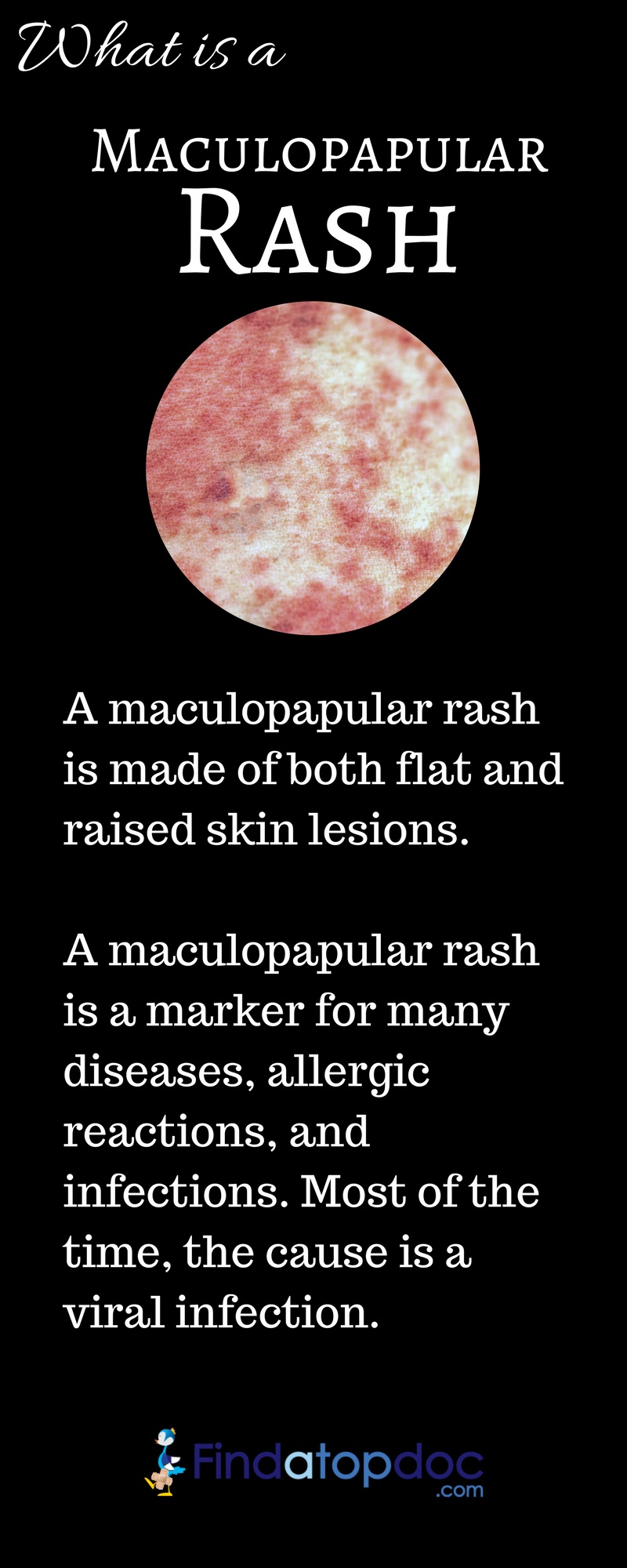
Maculopapular Rash
Image Source

Causes


Rubeola (Measles) - Maculopapular rash due to measles is very common among children. It begins appearing on the hairline and behind the ears and afterwards spreads through trunk and extremities. When the rash desquamates and becomes brownish, it is starting to fade away. The order on which it appeared follows the order on when it fades away.
Rubella (German Measles) - Maculopapular rash caused by Rubella starts to appear on the face and then spreads downwards.
Roseola (Exanthema Subitum) - This occurs in children less than 3 years old. The maculopapular rash is scattered although the face is often unaffected. It appears after the fever disappears.
Infectious Mononucleosis - Older children and adolescents are affected by this kind of infection. The rash can be seen on the trunks and arms.

Symptoms


A maculopapular rash looks like red bumps on a flat, red patch of skin. The reddish area may not show up if your skin is dark. The rash is sometimes itchy, and it can last from two days to three weeks depending on the cause. Moreover, how quickly the rash appears and where it appears on your body differs depending on the cause of the rash.
  • fever
  • headache
  • vomiting
  • breathing troubles
  • muscle pain
  • dry skin

Treatment


Once the cause of the rash has been identified, treatment is targeted at the specific cause, and hopefully the rash will disappear after a few days. This is usually the best way of treating a maculopapular rash because it targets the root cause. If the cause is a drug reaction, the doctor can alter your medication, reduce your dosage or offer you an anti-allergy medication to reduce the reaction. Nevertheless, some kinds of pain relievers may still be offered, often in the form of a cream, to reduce pain or itchiness caused by the rash.

Monday, April 16, 2018

Can Adults Get Croup?

Croup is an inflammation of the larynx and trachea, mostly seen in young children, but can appear in adults as well. Barking coughs, varying degrees of airway obstruction, and hoarseness are the symptoms of croup. A variety of infectious conditions can lead to croup. It is also known as laryngotracheobronchitis. The barking cough that is characteristic of croup results from swelling and inflammation around the vocal chords and windpipe. Symptoms usually improve within a few days, but hospitalization may be needed in severe cases. Croup affects 3 percent of children between 6 months and 3 years of age in the United States.

Can Adults Get Croup_ How_.png

Symptoms

Symptoms of croup may include:
  • a loud, barking cough that gets worse at night
  • labored, noisy breathing
  • high fever
  • agitation
  • fatigue

What Causes Croup?

Croup is most commonly caused by a viral respiratory infection. Common viral causes include influenza, adenovirus, respiratory syncytial virus (RSV), and rhinovirus. Prior to the vaccine era, diphtheria caused most cases of croup and was referred to as membranous croup, but today, fortunately, vaccination against diphtheria has made it an exceedingly rare disease.

Treatment

Adults with croup may need more aggressive treatment than children. Your doctor might prescribe a steroid, such as dexamethasone or epinephrine to lessen swelling in your airways. You might need to spend time in the hospital if your condition is severe. Research shows that adults with croup typically stay in the hospital longer than children with croup. Sometimes doctors will need to place a breathing tube in your windpipe to help you breathe.