Showing posts with label Psychiatrist. Show all posts

Friday, April 6, 2018

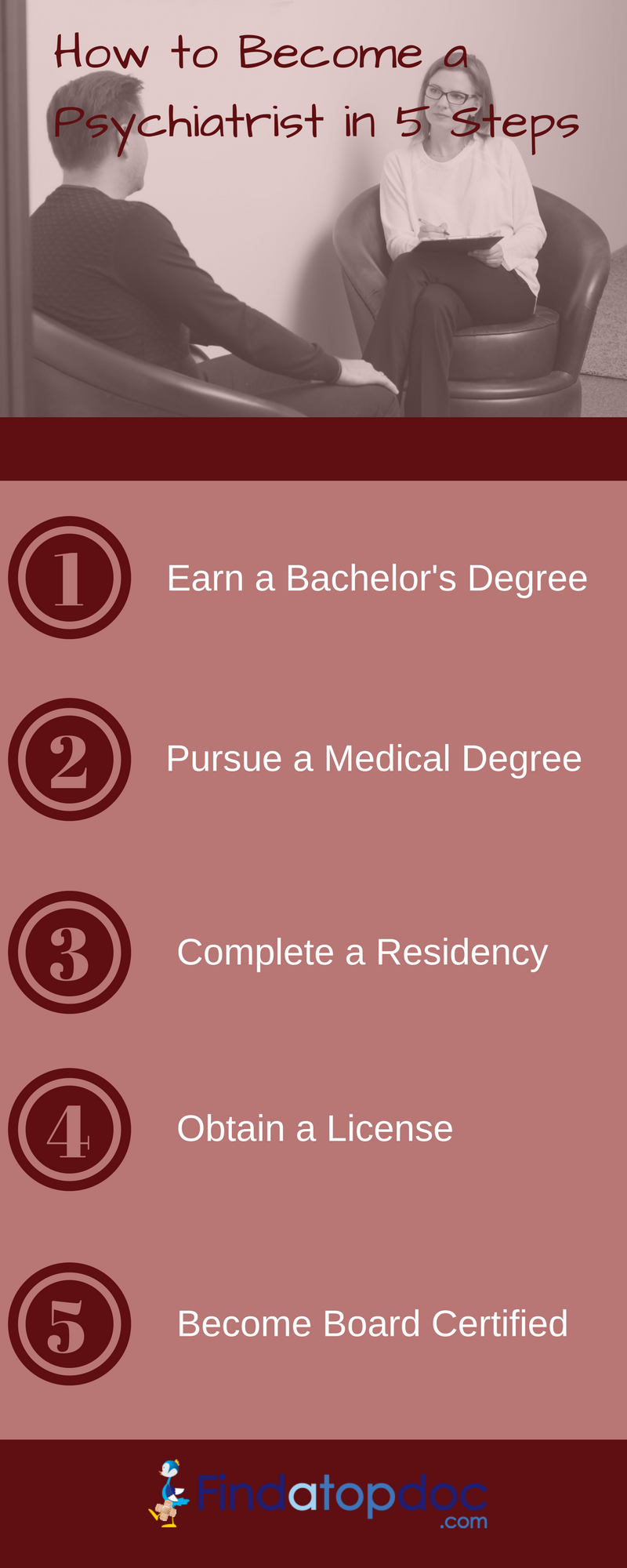
How to Become a Psychiatrist in 5 Steps

Psychiatry is the branch of medicine focused on the diagnosis, treatment as well as prevention of mental, emotional and behavioral disorders. A psychiatrist is a medical doctor who specializes in mental health, including substance use disorders. Psychiatrists are qualified to assess both the mental and physical aspects of psychological problems. People seek psychiatric help for numerous reasons. The problems can be sudden, such as a panic attack, frightening hallucinations, thoughts of suicide, or hearing "voices.

psychiatrist
Source

What does a psychiatrist do?

Psychiatrists assess all of your mental and physical symptoms. They make a diagnosis and work with you very thoroughly to develop a plan for your treatment and recovery. Psychiatrists provide psychological treatment, prescribe medications and even do some procedures.
As part of their work, a psychiatrist can:
  • provide urgent care for a sudden mental illness
  • help you to manage a long-term mental health condition
  • provide advice about lifestyle changes
  • work with you individually, or with you and your partner
  • refer you to other health professionals

Types of Psychiatrists

There are a number of different specialty areas in psychiatry. Some different types of specialized psychiatrists include:
  • Addiction psychiatrist: Works with people who have addiction and some substance abuse issues
  • Adult psychiatrist: Works with adults experiencing mental illness or psychological problems
  • Adolescent and child psychiatrist: Works with children and teens
  • Forensic psychiatrist: Works in the courts and criminal justice system
  • Geriatric psychiatrist: Works with elderly populations
  • Neuropsychiatrist: Treats mental disorders associated with nervous system problems, brain diseases, and brain injuries
  • Organizational psychiatrist: Practices psychiatry in workplace and organizational settings

Where do psychiatrists work?

Psychiatrists work in public and private hospitals, community mental health services and in private consulting rooms. Psychiatrists are very often involved in research, providing advice in legal matters, teaching and advocacy work. This means they also work in government departments, research centers and universities. Many psychiatrists take on a few different roles at the same time. They might spend part of their time at a public hospital and the rest seeing patients at their own private practice.

Monday, March 26, 2018

What is Difference Psychologist vs Psychiatrist

If you have mental health concerns, you should definitely seek help and someone you can talk to. But where do you go? How do you know what type of doctor you should talk to? Do you look for a psychiatrist or psychologist? If you’re unsure what the difference is, you’re not alone. There’s a lot of confusion out there. There are similarities, but there are important differences, too.

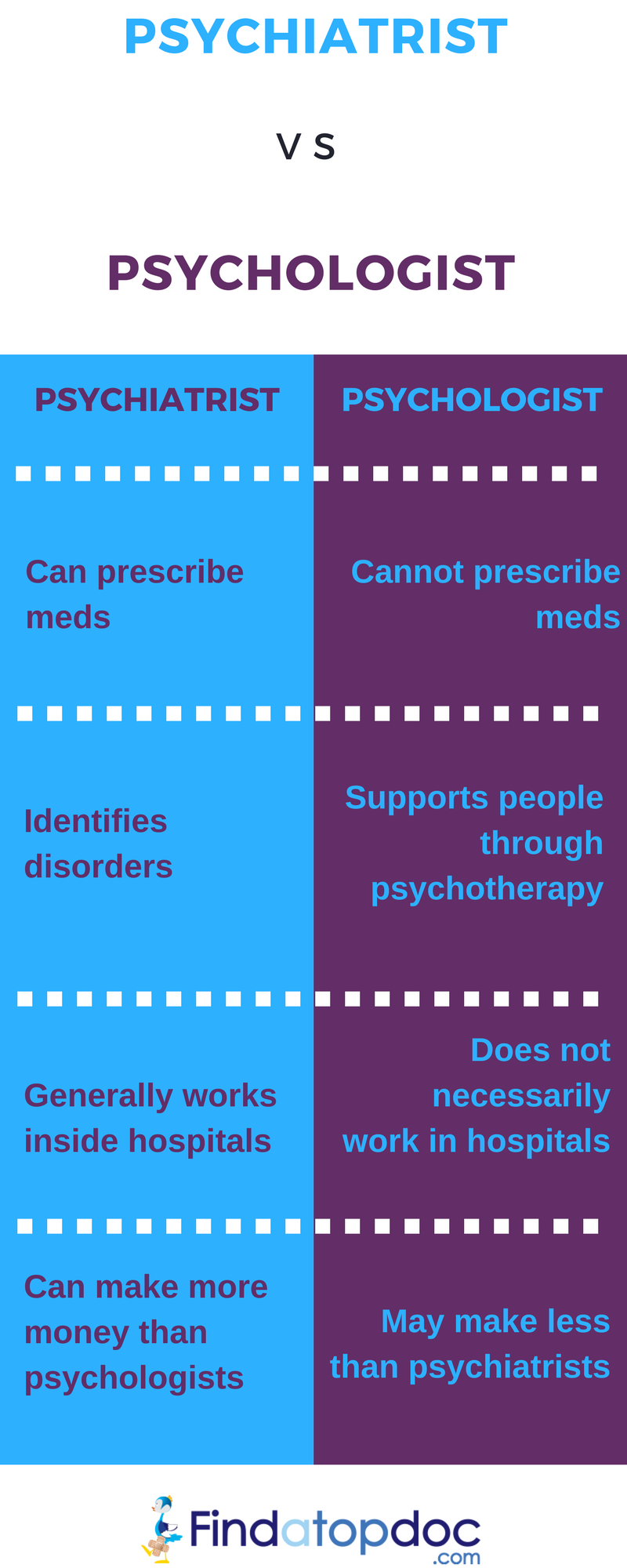
PsychiatristvsPsychologist.png
Source

The four main differences between psychiatrists and psychologists are:
  • Psychiatrists are medical doctors, psychologists are not.
  • Psychiatrists prescribe medication, psychologists can’t.
  • Psychiatrists tend to treat complex and serious mental illness, psychologists tend to treat less serious conditions.
  • You need a referral from your GP to see a psychiatrist, while you don’t for a psychologist.

How they’re Alike

Psychiatrists and psychologists are different types of doctors trained to help you deal with mental health issues. Both are there to talk you through your problems. Their goal is to provide you with the means to manage the issues in your everyday life. Although there are differences in the two fields, psychiatrists and psychologists often work together in the treatment of patients. A psychologist is not able to write prescriptions, but may recommend a patient be seen by a fellow psychiatrist in order to receive medications

Treatments provided

Psychiatrists can provide a wide range of treatments, according to the particular problem and what will work best. These include:
  • medication
  • general medical care, including checking your physical health and the effects of medication
  • psychological treatments
  • brain stimulation therapies such as electroconvulsive therapy (ECT).
  • Psychologists focus on providing psychological treatments.

Conditions treated

Psychiatrists tend to treat people who need their medical, psychological and social needs considered. These are usually people with complex conditions, for example:
  • severe depression
  • schizophrenia
  • bipolar disorder.
Someone who has attempted suicide or has suicidal thoughts will usually be seen by a psychiatrist.